For junk removal pa, homeowners can arrange help with couches, mattresses, dressers, and other bulky furniture. A removal crew can review the items, plan a safe route, and consider reuse when furniture is in usable shape. In Winchester, setting aside belongings that should stay helps make pickup clearer and smoother.
Furniture can be hard to move through narrow halls, down stairs, or out of a crowded room. A clear plan helps protect people, walls, floors, and other belongings. This guide explains what homeowners can expect from residential furniture removal in Pennsylvania, from sorting items to choosing a service.
Table of Contents
- What does residential junk removal include in Pennsylvania?
- Which furniture items can be removed from your home?
- How should you prepare furniture for removal?
- How can bulky furniture be removed safely?
- What happens to furniture after it is hauled away?
- How can homeowners plan a furniture removal job?
- How do you choose a junk removal service in Pennsylvania?
- Frequently Asked Questions
- Key takeaways
- Conclusion
What does residential junk removal include in Pennsylvania?
Residential junk removal helps homeowners clear unwanted things from a house, garage, basement, or other home space. It may include furniture pickup, household cleanouts, and bulky items that are hard to carry alone. Each company may accept different items, so ask what can go before arranging a pickup.
How furniture removal fits into a household cleanout
Furniture removal can be one part of a larger cleanout. A homeowner may remove a sofa while clearing a living room, or arrange pickup of several pieces during a move. A cleanout can also include boxes, household goods, and other unwanted things. Sorting items first helps the crew see what should leave.
A furniture-only pickup may work well when a home has just one or two large pieces. A larger cleanout may suit a home where several rooms need attention. For either job, point out each item that should go and keep the belongings that are staying in a separate place.
Which bulky household items can be hauled away?
Many services take couches, chairs, tables, bed frames, dressers, and mattresses. Some may also take appliances or other household goods, but accepted items vary. Refrigerators and other appliances may need special care because some parts or materials should not go with ordinary rubbish.
Ask about a refrigerator before arranging pickup. Also ask where furniture and appliances go after collection. Winchester Junk Removal can help Winchester homeowners learn what may be included in a residential pickup and how to prepare. Check whether the home is within the main Winchester service area, including Old Town Winchester, Handley, Stephens City, Berryville, Front Royal, Middletown, and nearby communities.
Which furniture items can be removed from your home?
A furniture removal service may take common household pieces, such as sofas, mattresses, dressers, dining tables, and chairs. The size and condition of an item, along with where it sits, can affect how it is moved. Tell the service about pieces that are unusually large, heavy, or damaged.
Couches, mattresses, dressers, and dining sets
Couches and sectionals can be awkward to move because they are wide and hard to turn. Mattresses can be bulky, and dressers may be heavy even when empty. A dining set can include several chairs and a large table. List each piece rather than describing the whole set as one item.
Before pickup, take off bedding, cushions, and loose belongings. Empty dresser drawers to make the furniture easier to move and keep personal items from being lost. If a piece has glass shelves or a mirror that comes off, tell the service when you arrange the pickup.
Furniture does not have to be in perfect shape to be removed. A broken chair or damaged table may still be accepted, but check first. Point out sharp edges, broken glass, or loose parts. This gives the crew a chance to plan a safer way to handle the item.
Items that may need special handling or separate disposal
Some things may not be accepted with ordinary furniture. Refrigerators, freezers, electronics, and items with harmful materials can have different handling rules. Concrete pieces and building waste are also different from household furniture, so ask about them on their own.
Empty a refrigerator before pickup. Do not cut wires or try to take out parts that may hold refrigerant. Refrigerant is a material used to cool the appliance. If you are unsure how to get rid of a refrigerator or another appliance, ask the removal service or your local waste office.
How should you prepare furniture for removal?
Homeowners can help pickup go smoothly by choosing what stays, clearing a path, and sharing useful details ahead of time. These steps can help prevent delays and protect walls, floors, and nearby belongings. You do not need to take apart every item unless the service asks or the task is safe and simple.
Clear a safe path from the item to the exit
Move shoes, toys, rugs, and small furniture away from the route. Check that doors open fully and stairways have no loose items. If the route has a tight turn, narrow hall, or steep stairs, tell the service when you arrange pickup.
Keep children and pets away from the work area while items are being lifted. Move fragile belongings to another room if you can. A crew may need space to turn a couch or carry a mattress upright, so an open route can help.
Identify items to keep, donate, or remove
Mark furniture that should stay in the home. Put small belongings somewhere safe before the crew arrives, and do not leave important items on furniture being removed. If several people live in the home, check with them before deciding that a piece can go.
A simple sorting plan can help:
- Keep furniture that will remain in use.
- Set aside clean items in good shape for possible reuse.
- Mark broken or unwanted pieces for removal.
- Ask about appliances or materials that may need separate handling.
Homeowners can usually sort belongings and move small, safe items out of the way themselves. A professional is not needed just for these basic steps. For heavy lifting, hard access, or unclear disposal rules, ask the removal service what is safest.
How can bulky furniture be removed safely?
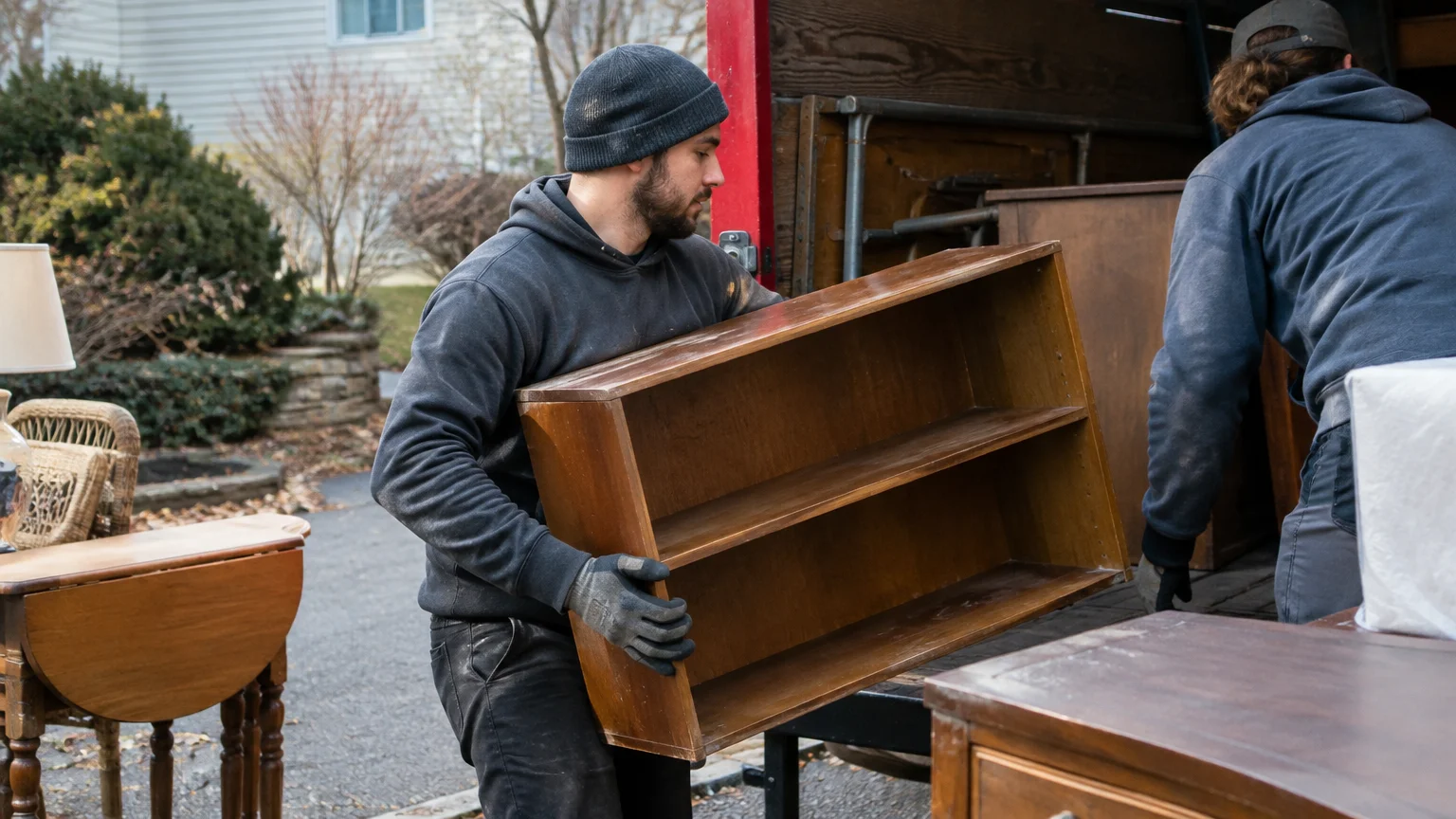
Safe furniture removal depends on the item, the route, and the people lifting it. Heavy or awkward pieces can hurt someone or damage walls if moved without a plan. Do not try to lift an item alone if you cannot control its weight or see the path clearly.
Why lifting, stairs, and narrow hallways require planning
A large sofa may fit through a doorway only when it is turned the right way. Stairs and narrow halls can make that turn harder. Fragile floors and sharp corners also need care. Measuring the item and noting tight spots can help the crew plan before moving it.
Check whether doors need to stay open and whether loose rugs or small objects block the route. Do not stand below a heavy item being carried on stairs. Children and pets should stay away until the furniture is out of the home.
When disassembly or additional help may be needed
Some bed frames, tables, and sectionals come apart, which can make them easier to move. You can take off simple parts if the directions are clear and the task feels safe. Stop if a piece is stuck or unstable, or if it needs tools you do not know how to use.
Large or damaged furniture may need more than one person to carry safely. The removal crew can decide how many people and what plan the job needs. Tell the service about unusual weight, broken parts, or access limits before pickup, rather than waiting until the item is being moved.
What happens to furniture after it is hauled away?
After pickup, furniture may be considered for reuse, donation, recycling, or disposal. The right choice depends on its condition, local rules, and whether a suitable place can take it. Ask the service how it handles usable items and what may happen to damaged pieces.
Donation and reuse when items are suitable
Furniture in clean, usable shape may be suitable for donation or reuse. A charity or reuse group may have its own rules for stains, wear, safety, and the kinds of items it takes. A service cannot promise that every piece will be accepted, so ask how it checks furniture for reuse.
If a piece may be donated, keep it clean and dry before pickup. Include all parts that belong with it, such as removable shelves or table leaves. Tell the service about any damage so no one mistakes a worn or unsafe item for one ready to use.
Recycling and responsible disposal options
Some furniture parts may be recycled, while other parts may need to be thrown away. Furniture can contain wood, metal, fabric, and foam. A piece made from several materials may be harder to recycle than a simple metal frame.
Local rules and available places to take items differ across Pennsylvania. Ask a service how it usually handles furniture and check local guidance for items that need special disposal. Refrigerators and other appliances should not be treated like ordinary furniture. Ask about the right way to handle each appliance before pickup.
How can homeowners plan a furniture removal job?
A little planning helps homeowners explain the job and choose a pickup that fits their needs. Note which pieces need to go, where each one is, and any limits along the route. Sharing clear details can help the service decide what the job may need.
Make a clear item list
Write down each item, how many there are, and whether any are broken or unusually heavy. For example, “one sectional sofa, one mattress, and two dressers” gives a clearer picture than “some furniture.” Photos may also help explain a large or unusual item if the service lets you share them.
Keep furniture apart from other things you may want removed. If the job also includes a fridge, electronics, concrete, or household rubbish, mention those items separately. Different materials may need different handling, so clear details can help avoid confusion.
Think through timing and access
Choose a time when the route can stay clear and someone can point out the items. If the home has a shared entrance, narrow driveway, or building rules, tell the service before pickup. Renters and property managers may also need permission before removing furniture from a unit.
Not every job needs special preparation. Many homeowners can sort items, clear small obstacles, and confirm what is leaving on their own. Professional help can be useful for heavy lifting, tricky stairs, or materials that should not be moved without care.
How do you choose a junk removal service in Pennsylvania?
A good service should explain what it accepts, how pickup is set up, and how items may be handled afterward. Compare services by asking clear questions and checking whether the answers fit your job. Winchester Junk Removal serves the Winchester area and can explain the steps for a household pickup.
Questions to ask about item handling and disposal
Ask whether the service takes each piece, including appliances or damaged furniture. Find out whether usable furniture may be considered for reuse or donation and whether special items need a separate plan. You can also ask what the crew needs to know about stairs, narrow doors, and long carrying routes.
Useful questions include:
- Does the service accept every item on the list?
- Should appliances or damaged pieces be described separately?
- How should the homeowner prepare the furniture and route?
- What may happen to furniture that cannot be reused?
Clear answers help homeowners know what to expect. If the service is unsure about an item, confirm before pickup rather than assuming it will be taken. This is important for refrigerators, electronics, and materials with special disposal rules.
What to expect when arranging a furniture pickup
When setting up a pickup, share the item list, where each piece is, and any access challenges. Ask what the crew needs from you and whether someone should be there to point out the items. A clear plan can help prevent furniture that should stay from being removed by mistake.
In Pennsylvania, local ways to dispose of items can differ by community. A service familiar with the area may explain its process, but you can still ask where special items should go. Check whether the home is in the Winchester service area before arranging pickup.
Frequently Asked Questions
How can someone get rid of old furniture?
A homeowner can donate usable furniture, offer it for reuse, or arrange removal. First, check the item’s condition and the group’s rules for what it accepts. For large or heavy pieces, a junk removal service may handle lifting and hauling. Share the item’s size, condition, and location when you arrange pickup.
How can someone get rid of broken furniture?
Broken furniture may still be accepted for hauling, but ask the service first. Point out sharp edges, loose parts, and broken glass before pickup. Do not try to carry an unstable piece alone. If parts can be taken off safely, keep them together so nothing gets left behind.
How should a refrigerator be disposed of?
Ask a junk removal service or local waste office how to dispose of a refrigerator in your area. Refrigerators may need special handling, so they should not be treated like ordinary furniture. Empty the appliance before pickup, and do not remove wiring or sealed parts yourself.
Can homeowners move furniture themselves?
Homeowners can move light items when the route is clear and they can control the load safely. You do not need a professional just to sort furniture or clear small obstacles. Heavy pieces, stairs, tight turns, or unstable furniture call for extra help and careful planning.
What should someone ask before booking furniture removal?
Ask whether the service accepts each item, how to prepare the furniture, and what access details the crew needs. Also ask how usable pieces may be handled and whether appliances need a separate plan. Clear answers help homeowners understand the pickup before the crew arrives.
Key takeaways
- Residential junk removal may include furniture pickup and household cleanouts.
- Accepted items and disposal choices can differ by service and location.
- Clear the route and set aside belongings that should stay.
- Do not lift heavy or unstable furniture alone.
- Ask how appliances and usable furniture may be handled.
Conclusion
Furniture removal can make a home easier to clear, especially when large pieces are hard to carry or fit through tight spaces. Make a list, clear a safe route, and ask about special handling before pickup. Winchester Junk Removal can help homeowners plan a residential furniture pickup. Contact us to discuss the items that need to go.