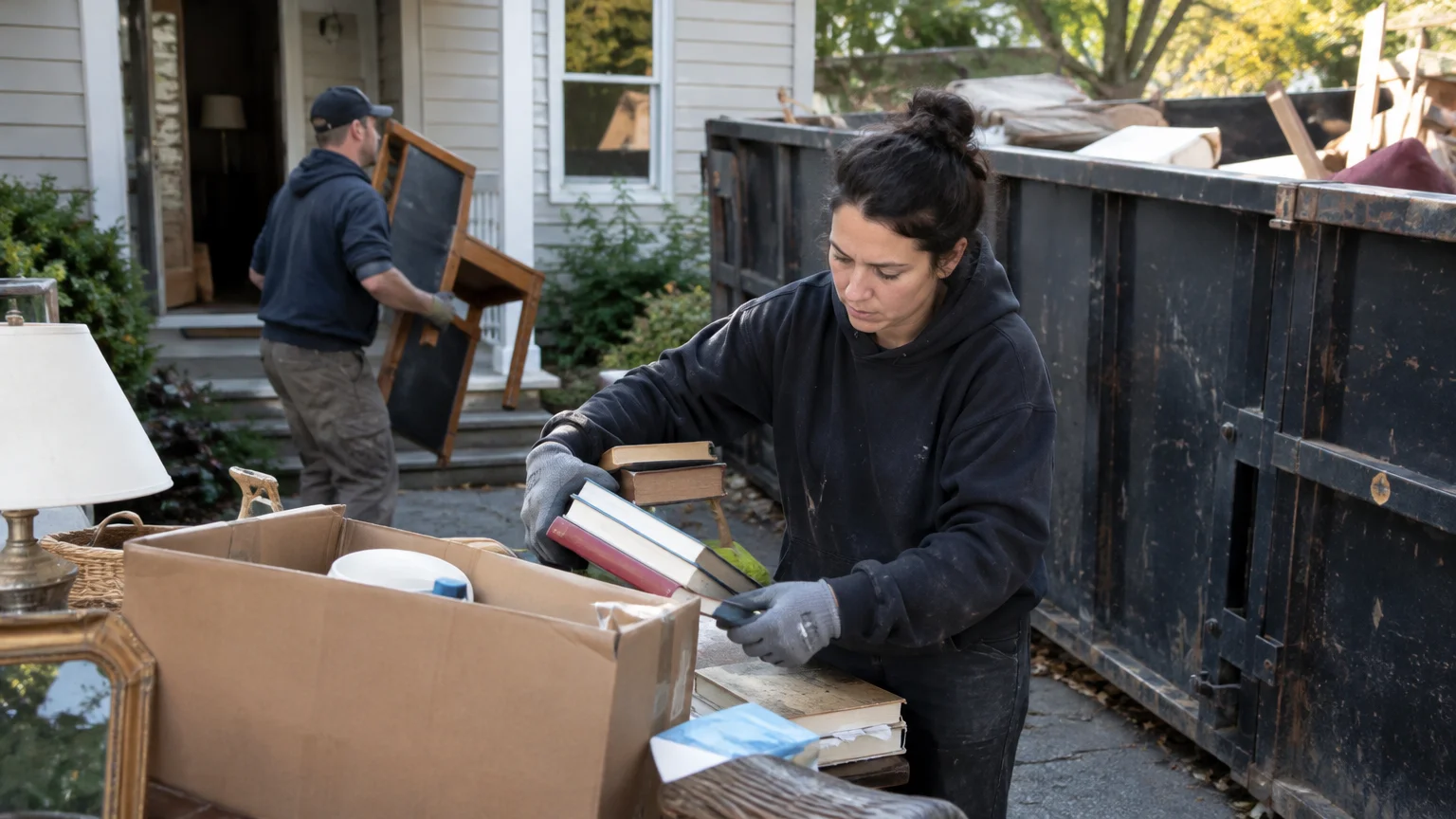
The choice between estate cleanout vs dumpster rental depends on who will do the work, how soon the home must be ready, and what it contains. A cleanout crew sorts, lifts, loads, hauls, and disposes of items. A dumpster gives you a container, but you handle the labor and loading.
Table of Contents
- What is the difference between an estate cleanout and dumpster rental?
- When does an estate cleanout service make more sense?
- When is a dumpster rental a practical option for an estate?
- Which option is faster for preparing an inherited home?
- How do labor and responsibility compare between the two options?
- How should you sort belongings before clearing an estate?
- What happens to furniture, appliances, and household debris?
- How much does an estate cleanout compare with dumpster rental?
- What should you consider before choosing either option?
- Which estate cleanout option is the better fit for your property?
- Frequently Asked Questions
What is the difference between an estate cleanout and dumpster rental?
An estate cleanout service includes the labor needed to clear a home. A crew may sort items, carry heavy belongings, load them, haul them away, and sweep the space. A dumpster rental only provides a container. The property owner or helpers must move each item and load it safely.
This difference matters after a death, move, foreclosure, or major property change. An estate may hold furniture, clothing, dishes, books, papers, appliances, yard waste, and personal items. Some belongings may be donated or recycled. Other items may need special handling. A dumpster does not sort these items or choose where they should go.
A cleanout service handles more of the physical work. This can help when family members live far away, have little time, or cannot lift heavy objects. It can also help when the home must be ready for an agent, buyer, landlord, or new occupant.
A dumpster may work well for a simple removal job. The home should already be sorted, the items should be easy to move, and strong helpers should be available. The property also needs a safe place for the container and enough time for loading.
The right choice depends on the home, schedule, and help available. Winchester Junk Removal can help property owners think through the work before choosing a plan.
When does an estate cleanout service make more sense?
An estate cleanout service often makes sense when a home needs sorting, heavy lifting, and removal from many rooms. It can help with inherited homes, estates after a loss, foreclosure properties, and homes that have been closed for a long time. The service can reduce the number of tasks placed on the family or executor.
An executor is the person named to manage an estate. That person may need to protect papers, arrange donations, prepare the home for sale, and update heirs. Handling every box and piece of furniture alone can make the job slow and hard.
A full-service crew may be a good fit when:
- The home has furniture, appliances, boxes, and debris in many rooms.
- Family members live outside Winchester, including nearby communities such as Stephens City, Berryville, Front Royal, and Middletown.
- The property must be cleared before a listing, closing, lease, or inspection.
- Heavy items need more than one person to move safely.
- The family needs help separating donations from regular household waste.
- The home has stairs, narrow halls, limited access, or a long path to the truck.
A crew does not make family decisions for the executor. Family members still choose what to keep, sell, donate, or discard. The crew can handle the physical work after those choices are clear.
This option may also help when emotions make the job harder. Sorting a loved one's home can take time. A respectful team can follow instructions and avoid rushing through personal belongings. The goal is a clean, useful property while important items stay under the family's control.
When is a dumpster rental a practical option for an estate?
A dumpster rental can work when the estate is already sorted and several people can load the container. It may suit a home with a clear driveway, easy access, and mostly regular household debris. The owner should still check local rules and learn which materials the rental provider accepts.
A dumpster is less hands-on than a cleanout service. It does not carry items from rooms, separate donations, protect keepsakes, or choose the best path for appliances. Those jobs remain with the people managing the estate.
Before the container arrives, the owner should choose a safe placement area. The ground should be firm, and the container should not block emergency access, shared drives, sidewalks, or nearby property. Some communities or property managers may require permission when a container sits near a street.
The owner should also make a loading plan. Heavy furniture should not be placed where it could fall on someone. Sharp objects need care. Items with chemicals, refrigerants, batteries, or other controlled materials should stay out unless the provider clearly accepts them.
A dumpster may fit a short job with clear limits. It may be harder when the home has many rooms of mixed belongings. In that case, carrying, sorting, loading, and cleaning may take most of the time.
Which option is faster for preparing an inherited home?
A full-service estate cleanout is often faster when the home has many belongings or a firm deadline. A crew can work through rooms, carry items, load vehicles, and manage removal during one planned visit or scheduled job. A dumpster project may take longer because the owner must gather helpers and complete every step.
Speed depends on more than the home's size. Stairs, doors, parking, item weight, access, and sorting all affect the work time. A smaller home may still take a while if every box needs review.
A dumpster project has several steps. The owner must decide what leaves, gather people, move items, load the container, and clean the rooms. If helpers cancel or weather changes, the job may slow down. The rental period may also limit the time available.
A cleanout crew can help when an agent, buyer, landlord, or attorney needs the home ready soon. The crew can focus on physical work while the executor handles records, family updates, and legal tasks. Clear instructions before work begins can prevent delays.
Urgent does not mean careless. Important papers, photographs, jewelry, family records, and keepsakes should be removed before general loading starts. A short written plan can show what stays, what leaves, and who makes final choices.
How do labor and responsibility compare between the two options?
With a dumpster, the homeowner, executor, or helpers handle most of the labor. They move items from rooms, stairs, attics, basements, and garages. They also load the container, keep items below its fill line, and clean the property afterward.
With a cleanout crew, the team can handle much of the physical work. Depending on the service plan, this may include carrying, loading, hauling, sorting support, and a final sweep. The owner still controls personal choices and should point out anything that must stay.
This difference matters for older adults and people with injuries. Furniture, appliances, and packed boxes can be heavy and hard to carry. A person should not lift an item alone when the path is narrow or the weight is unclear. Homeowners can safely do light sorting, but heavy removal is better left to trained workers.
A clear work plan should list the rooms, items, access points, fragile belongings, and materials needing separate handling. It should also say whether donations, recycling, or special disposal are part of the job. Written notes can reduce confusion among heirs and helpers.
Winchester Junk Removal can help property owners review the work before choosing a removal plan. A local team may know common access concerns in Winchester, but the owner should share every known issue before scheduling.
How should you sort belongings before clearing an estate?
Sorting should happen before general removal starts. First, protect personal items, legal papers, valuables, and anything family members may want. Next, separate donations, recycling, household waste, and items needing special handling.
A simple process can make a large home easier to manage:
- Gather heirs or decision-makers and agree on who can approve removal.
- Set aside wills, deeds, tax papers, account records, photographs, and medical documents.
- Mark items to keep, donate, sell, recycle, remove, or review later.
- Check drawers, closets, cabinets, garages, sheds, attics, and vehicles.
- Photograph rooms and valuable items before moving anything.
- Make a final walk-through before loading begins.
Labels should be clear and easy to see. A colored note may help, but written words are better than color alone. Family members should have time to review uncertain items. Rushing can lead to the loss of objects with personal or legal value.
A house cleanout sale may help with selected furniture and household goods. It is not a full removal plan. Items that do not sell still need another destination. Donation groups may accept usable goods, but each group has its own rules.
Homeowners can safely sort light items and basic papers themselves. They should not open unknown containers or move unsafe materials. A professional should handle heavy, unstable, or possibly harmful items.
What happens to furniture, appliances, and household debris?
Furniture and appliances need a plan because they are large, heavy, and hard to carry. A crew may remove sofas, beds, tables, cabinets, washers, dryers, refrigerators, and other bulky items if the service accepts them. The final destination depends on condition, material, and local rules.
Usable furniture may go to a donation group or resale channel. Metal appliances may go for recycling. Broken pieces may follow regular disposal rules. Refrigerators, freezers, air conditioners, and similar items may need special handling because they can contain refrigerant. Batteries, paint, fuel, cleaners, and chemicals should never go into a dumpster unless the provider confirms acceptance.
Old mattresses also need planning. Rules can differ by facility and service provider. The same is true for televisions, computers, tires, propane containers, and fluorescent bulbs. Ask before placing these items in a container or truck.
Yard debris creates another concern. Branches, leaves, and storm debris may have separate drop-off rules. Anyone asking where to drop off tree branches near Winchester should check the local facility or ask the removal provider about accepted materials.
A hot tub is another bulky-item example. Removing one may involve draining it, disconnecting utilities, cutting the shell, and moving heavy sections through a safe path. Work should not begin until power and water connections are handled safely. A removal crew can explain what preparation is needed.
How much does an estate cleanout compare with dumpster rental?
The total cost of an estate cleanout or dumpster rental depends on the work involved, not just the number of rooms. Main factors include the amount of debris, labor, access, loading needs, disposal rules, rental time, and material types. The final cost is confirmed on a quote for the property.
A dumpster may seem simple when the owner has helpers and only regular debris. Still, the owner must account for the time and effort needed to sort, carry, load, and clean. A container kept longer may also change the total charge. Extra handling may be needed for items that cannot go inside.
A full-service cleanout includes more labor. It may fit a home with heavy furniture, many rooms, stairs, long carry paths, or a short deadline. A mixed load also needs more planning than a pile of similar debris.
Access can change either choice. A container may be hard to place at a home with a narrow drive. A crew may need more time when trucks cannot park near the door. A clean, sorted home is also very different from a packed home with blocked paths.
The best question is not simply which choice looks cheaper. Ask which option matches the labor, time, safety needs, and disposal plan. Property owners should request a clear quote and ask what work, materials, and final cleanup it includes.
What should you consider before choosing either option?
The right choice becomes clearer when the owner reviews the property and the people available to help. A short checklist can prevent a rushed decision. It should cover access, time, labor, item types, family needs, and the final condition required.
Before choosing, consider:
- Who has legal authority to decide what leaves the property?
- Which rooms, outbuildings, vehicles, and yard areas need clearing?
- Are there stairs, narrow halls, locked gates, or long paths to the truck?
- Can enough helpers work safely during the available time?
- Must the property be ready for sale, rent, inspection, or closing?
- Are there appliances, chemicals, batteries, mattresses, or electronics to handle?
- Which items must be donated, recycled, sold, stored, or kept by heirs?
The executor may also need to work with an attorney, real estate agent, landlord, property manager, or insurance company. Each person may have different needs. Written approval can help when several heirs share responsibility.
A dumpster may fit a simple, planned project. A full-service cleanout may fit a mixed project with little available labor. Some owners may use both choices at different stages, but disposal rules should be clear before work begins.
The home should also be checked for safety. A blocked walkway, unstable stack, mold concern, pest issue, or damaged floor can affect the plan. Homeowners can handle light cleaning and sorting, but they should not enter unsafe areas or move unstable loads without help.
Which estate cleanout option is the better fit for your property?
A dumpster rental is usually a better fit when the home is sorted, helpers are ready, access is simple, and the owner can manage loading. An estate cleanout service is often better when the home needs hands-on labor, careful sorting, bulky-item removal, or a faster turnaround.
The emotional side matters too. Clearing an inherited home can be hard for families. A respectful crew can handle physical work while relatives focus on decisions and meaningful belongings. The service should follow family instructions and treat the property with care.
Key takeaways
- A dumpster provides space, but the owner handles the labor.
- A cleanout crew can sort, carry, load, haul, and sweep.
- Important papers and keepsakes should be protected before loading.
- Appliances, mattresses, chemicals, and electronics may need special rules.
- The best choice depends on time, access, labor, property condition, and disposal needs.
For a hands-off project, Winchester Junk Removal can help property owners plan an estate cleanout that fits the home's condition and deadline. Contact us to discuss the property and arrange the next step.
Frequently Asked Questions
What is a cleanout service?
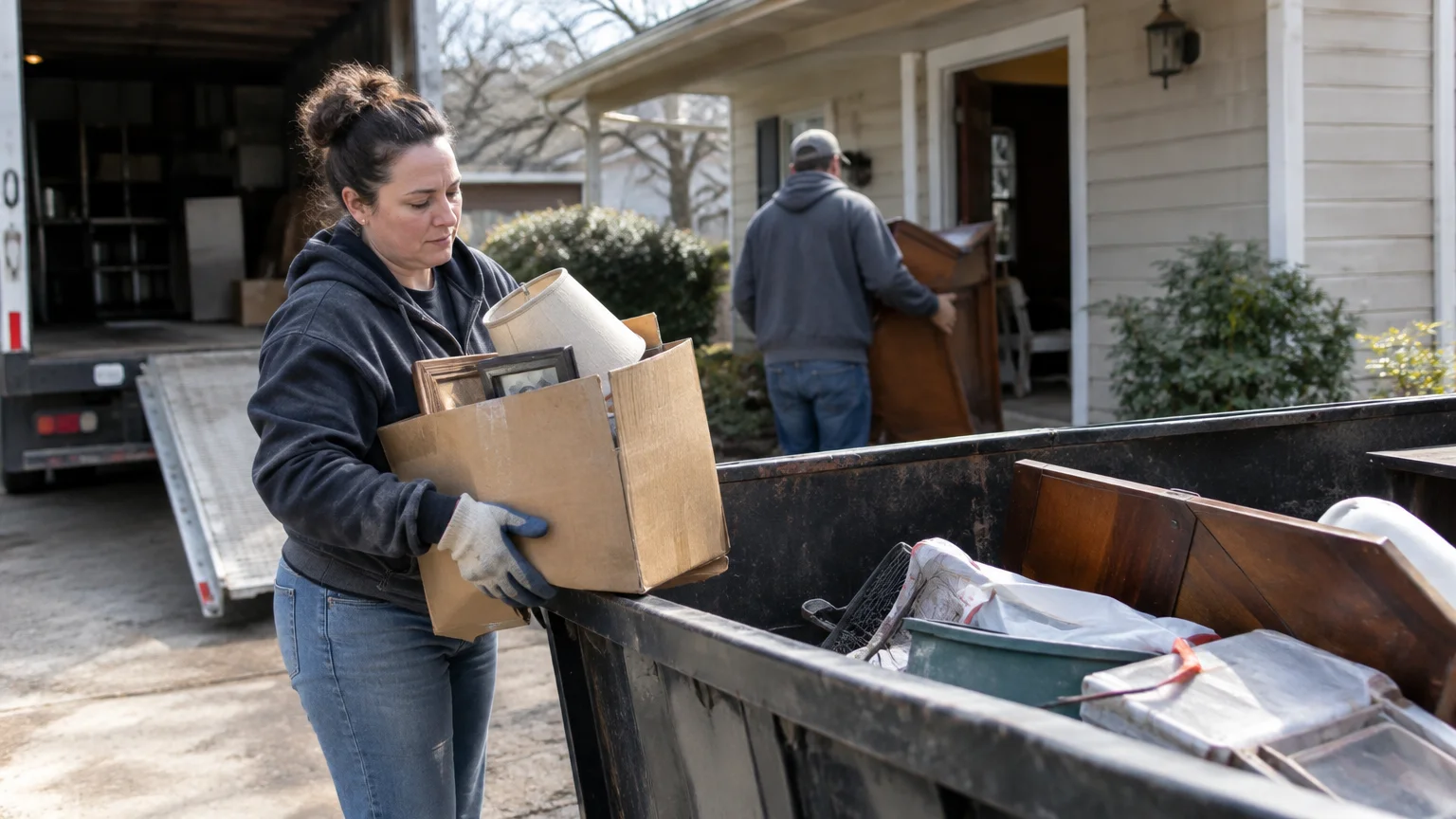
A cleanout service removes unwanted items from a property. The work may include sorting help, carrying, loading, hauling, disposal, and sweeping. It can help with inherited homes, foreclosures, moves, hoarding situations, and whole house cleanouts. The owner still decides which personal items must stay.
Can I put a mattress in a dumpster?
That depends on the dumpster provider and local rules. Some providers accept mattresses, while others need separate handling. Ask before placing one inside. A cleanout company may also explain the removal options. Do not leave a mattress beside a container without permission.
What happens to old appliances?
Old appliances may be donated, recycled, or disposed of based on their condition and materials. Refrigerators, freezers, and air conditioners may need special handling because of refrigerant. Share an appliance list before removal. Never disconnect electrical, gas, or water lines unless the work is safe.
How can someone get rid of an old hot tub?
An old hot tub may need draining, utility disconnection, cutting, and careful removal. Its size and location affect the safe plan. A homeowner should not cut electrical lines or move heavy sections alone. A removal crew can review the access path and explain preparation steps.
How should a family choose between estate cleanout companies?
Families should compare the work included, accepted materials, schedule, access plan, disposal process, and cleanup details. Ask who handles sorting, heavy lifting, appliances, donations, and final sweeping. A clear quote should explain the planned work. The company should also communicate respectfully with the executor and heirs.
When you are unsure what the property needs, having the job reviewed can prevent delays and extra work. Get in touch with Winchester Junk Removal to discuss the next step.
If you are not sure what you are dealing with, it is worth having someone look at it before it turns into a bigger job. Get in touch with Winchester Junk Removal today and we will tell you where you stand.