Appliance pickup FAQs explain what appliances a service may take, how to prepare them, and what to ask before booking. Pickup options can include refrigerators, washers, dryers, stoves, and dishwashers, though accepted items vary. In Winchester, clear details about each appliance and its location can help prevent delays and damage.
An old appliance can get in the way during a move, home update, or tenant change. Winchester Junk Removal can help homeowners, property owners, and businesses learn what to prepare before pickup. The right plan depends on the appliance, where it sits, and whether the crew can reach it safely.
Table of Contents
- What appliances can be picked up?
- How should I prepare an appliance for pickup?
- Do appliances need to be disconnected before pickup?
- Can appliances be picked up from inside a home or business?
- What happens to appliances after pickup?
- Are there rules for disposing of refrigerators and other appliances?
- How do I choose an appliance pickup option?
What appliances can be picked up?
Pickup services often handle large home appliances, but each service sets its own rules. Common items include refrigerators, freezers, washers, dryers, stoves, and dishwashers. Some services may take other large appliances, too. Describe each item before you set up a pickup.
Which large household appliances are commonly accepted?
A pickup crew may take an appliance from a home, rental unit, office, or other site. Some services accept both working and broken items, while others have limits. The appliance’s size, condition, parts, and location can affect whether the service can take it.
Make a short list before asking about pickup. Write down each appliance, whether it works, and where it is. A freezer in a basement may need a different plan from a stove near an outside door. Clear details help the service plan for the right crew and equipment.
Can businesses and property managers arrange pickup for multiple appliances?
Many services can discuss taking several appliances in one visit. This may help a landlord clear a unit or a business replace old equipment. When you ask, share the number and type of appliances. Also explain any limits on access.
For a larger cleanout, list items by room or unit. A property manager might note a refrigerator in each empty apartment and a washer in a shared laundry room. Winchester Junk Removal can discuss which items may fit the pickup plan. Confirm that the service accepts every item before moving anything.
Businesses planning office cleanout FAQs or retail removal FAQs may also need to explain which rooms the crew can enter. Make a clear list of the appliances and keep other items separate. That helps everyone understand what is part of the pickup.
How should I prepare an appliance for pickup?
Start by emptying the appliance and clearing a safe path. Take out food, dishes, clothing, and loose parts. Ask the pickup service what it needs before you move or take apart anything.
What should I do before removing a refrigerator?
Remove food and take out shelves or bins if the service asks you to. Wipe up spills and keep the doors from swinging during the move. Do not leave food or loose items inside for the crew to remove.
Keep children and pets away from the work area. Clear rugs, boxes, and small objects from the route to the exit. If a doorway or turn looks tight, measure it and tell the service before pickup.
A refrigerator door can close in a way that traps a child or pet. Keep the appliance secure and out of reach while it waits for removal. Follow the maker’s instructions for safe storage and handling.
Do washers, dryers, stoves, and dishwashers need special preparation?
Empty washers and dryers, and take loose items out of their drums. Remove cookware and food from a stove or oven. For a dishwasher, take out dishes and check for water inside. These steps make the appliance easier to handle, but they do not make its connections safe to remove.
Leave hoses, cords, and attached parts in place unless the service gives other instructions. Do not cut wires or force an appliance out of a cabinet. If a unit is built in or hard to reach, take photos to help explain the setup when you arrange pickup.
Do appliances need to be disconnected before pickup?
An appliance often needs to be disconnected before it can move, but each pickup crew has different limits. Water, gas, and electrical connections may need a qualified person. Before the visit, confirm who will handle disconnection. Do not touch a connection if it seems unsafe.
Who should disconnect water, gas, or electrical connections?
Do not assume a removal crew can disconnect every appliance. Gas lines, fixed electrical wires, and plumbing may need a qualified professional. Check the appliance instructions and local rules. Ask the pickup service what must be ready before the crew arrives.
Unplugging an appliance may be simple when it has a safe, easy-to-reach plug. The area must be dry. Do not touch a plug, wire, or outlet that is wet, damaged, hot, or hard to reach. Ask a qualified person to handle any concern.
A washer or dishwasher may have water lines that can leak if handled the wrong way. A gas stove needs extra care around its supply line. If you are unsure what kind of connection an appliance has, stop and ask a qualified professional before moving it.
What should I check before moving an appliance?
Check that the appliance is empty and ready to move. Make sure it is disconnected as needed, and look for sharp edges, loose parts, or water. Clear the route and keep other people away while the appliance is handled.
Large appliances can be heavy and hard to hold. You do not need a professional for simple tasks like removing food, wiping a surface, or clearing a path. But moving a heavy unit, handling a gas line, or dealing with a damaged connection calls for trained help and proper tools.
Can appliances be picked up from inside a home or business?
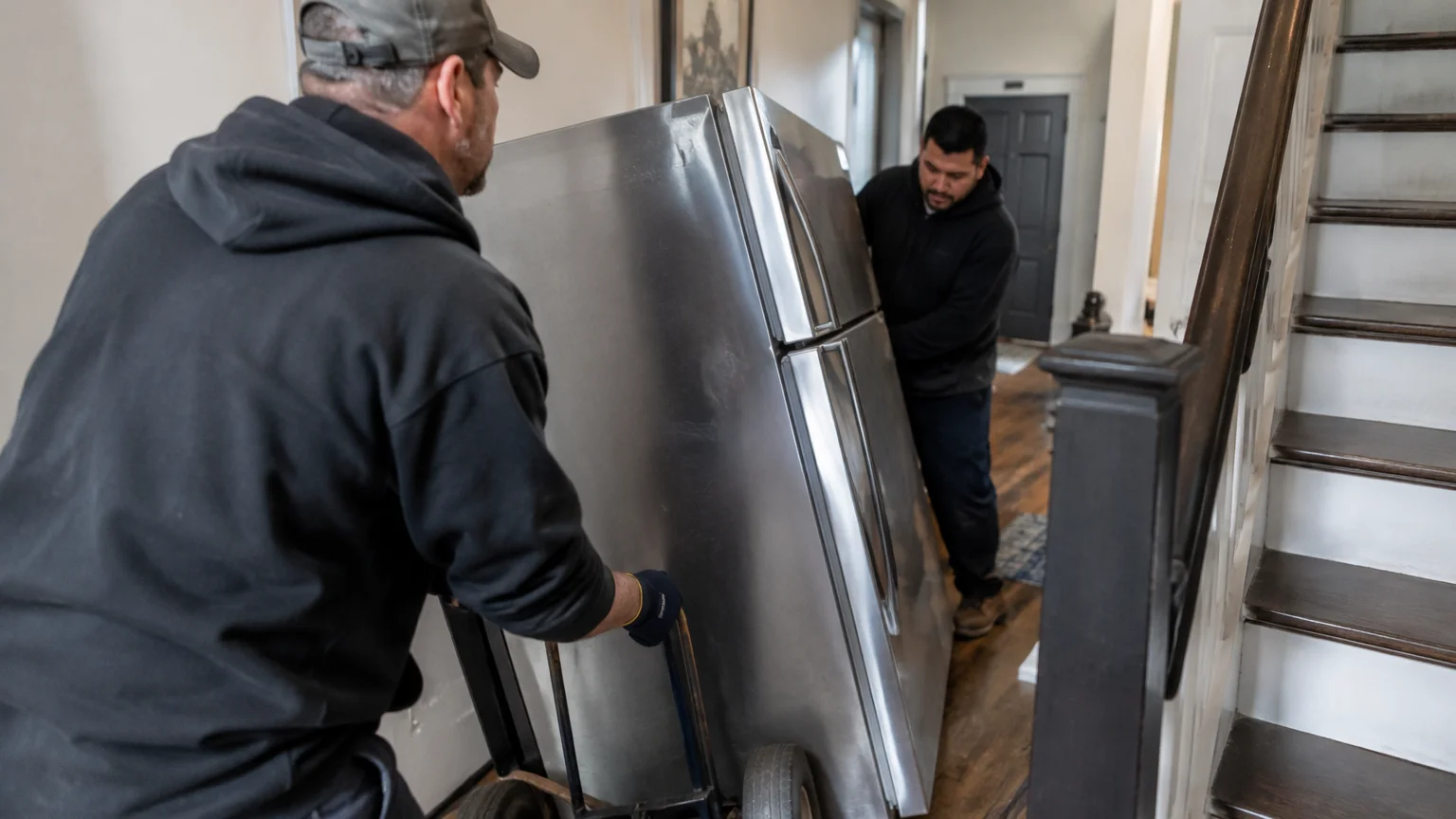
Many pickup services can remove appliances from inside a building if the route is safe and the service agrees. Stairs, narrow halls, elevators, locked doors, and long walks can affect access. Share these details before you arrange the pickup.
What access details affect pickup planning?
Tell the service where the appliance is and how the crew can reach it. Mention stairs, tight turns, low ceilings, parking limits, gates, loading docks, or elevator rules. For an office or store, explain any check-in steps or work-hour limits.
Clear the route before the crew arrives, if it is safe to do so. Move small furniture, boxes, and rugs out of the way. Do not try to move a heavy appliance alone just to make pickup easier. Tell the service if the unit is built in, stuck, or above or below the main floor.
Photos can show a tight spot or an unusual setup. They may also help the service ask the right questions before the visit. A clear plan can prevent delays and lower the chance of damage to walls, floors, or the appliance.
How can property owners prepare for appliance removal between tenants?
Property owners can list each appliance that needs removal and note its condition. Check every room, storage space, and shared area. Arrange access for the crew and explain tenant schedules or building rules.
For several empty units, group the list by unit or room. Mark appliances that are still connected, built in, or hard to reach. A clear list helps the property team and pickup service agree on the work before the visit. Keep entryways and shared halls clear for other residents.
Businesses can use the same plan when replacing break-room or laundry equipment. Set aside only the items approved for removal. Tell staff which areas need to stay open. Good preparation helps the pickup fit the needs of the site.
What happens to appliances after pickup?
After pickup, an appliance may be checked for reuse, recycling, or disposal. The next step depends on its condition, parts, materials, and local options. Ask the service how it handles each type of appliance.
Which parts and materials may be recycled?
Appliances can contain metal, plastic, glass, wiring, and other materials. A recycling site may separate some parts for recovery. The exact process depends on the appliance and the place that receives it.
Refrigerators and freezers need special care because they may contain refrigerants. A refrigerant is a substance that helps cooling equipment move heat. It must be handled with care by people and sites equipped for that work. Do not cut cooling lines or take apart a refrigerator yourself.
A service may sort appliances or take them to a suitable site, but methods can differ. Ask where the items go and whether any parts may be reused or recycled. This gives you a clearer idea of what happens without assuming every appliance follows the same path.
When might an appliance be donated or disposed of?
An appliance that works well may be fit for reuse if a receiving group wants it. A broken, unsafe, or incomplete appliance may instead go to a recycling or disposal site. Do not assume a donation group will accept an item.
A service can explain which options may work for your appliance. It may ask about age, condition, missing parts, or signs of damage. Check with a donation group before leaving an appliance there. It may not accept the item, and an appliance left outside can create a safety risk.
Are there rules for disposing of refrigerators and other appliances?
Yes, disposal choices can depend on the appliance and local rules. Refrigerators and freezers may need special handling because they contain refrigerants and other parts. Check with the local waste authority or ask the pickup service how it follows local rules.
Why do refrigerators and freezers require special handling?
Cooling appliances may contain refrigerants and parts that should not be released or damaged. A trained handler can send them through the right process. Keep the appliance whole. Do not remove sealed parts, cut lines, or try to drain it yourself.
Some refrigerators also have doors, shelves, or other parts that can create risks while the unit waits for removal. Keep the area secure and follow the maker’s guidance. If the appliance is damaged or leaking, keep people away and ask a qualified service what to do.
How can I check local disposal requirements?
Start with the local waste or recycling authority for Winchester and Virginia. Rules and drop-off choices may differ between communities. The maker may also offer safe handling guidance for a specific model.
Ask a pickup service how it handles refrigerators, freezers, and other appliances. Find out whether items may go to a reuse, recycling, or disposal site. If an appliance has a special feature or unusual material, mention it before pickup. The service can then check which options may apply.
How do I choose an appliance pickup option?
Choose a service that accepts your appliance, explains how to prepare it, and can work with the site’s access needs. Ask who handles disconnection and where items go after pickup. The work can depend on appliance size, item count, stairs, distance to the exit, and any special handling needs.
What should I ask when comparing pickup services?
Ask whether the service accepts each appliance and can remove it from inside the building. Confirm what must be disconnected, emptied, or moved before the crew arrives. Ask how the service handles refrigerators and any other items that need special care.
It also helps to discuss timing, building access, and any limits on the pickup. For a business or rental property, ask how to organize items across rooms or units. Clear answers help you understand what the service will do and what you need to prepare.
The work may change based on the number and type of appliances, access, and required handling. Ask the service to review those details before you confirm a plan. This helps set clear expectations about the work without guessing.
How can I get clear answers before pickup?
Share a full list of appliances, their condition, and where they are. Mention stairs, narrow openings, built-in units, and connection types. Photos can help explain details that are hard to describe in a message or call.
Key takeaways
- Confirm which appliances the service accepts before arranging pickup.
- Empty appliances and clear the route, but do not handle unsafe connections.
- Ask a qualified professional about gas, water, or fixed electrical connections.
- Check local guidance for refrigerators and other items needing special handling.
- Explain access limits and list every appliance that needs removal.
Frequently Asked Questions
How do you get rid of a refrigerator? Empty it, keep it intact, and arrange pickup or another option that follows local rules. Ask how the refrigerator will be handled, since cooling parts may need special care. Do not cut lines or remove sealed parts. Keep the unit secure while it waits for removal.
How should someone dispose of old appliances? First check what the local waste authority accepts. Then compare reuse, recycling, and pickup options for the appliance. Ask whether it needs to be disconnected or prepared in a certain way. Pickup services can explain their process, but accepted items and handling steps may differ.
Can a pickup service remove a broken appliance? Many services accept some broken appliances, but check first. Describe the item, its condition, and any missing or damaged parts. A broken refrigerator, for example, may need special handling. Do not try to repair or take apart an appliance just to prepare it.
Can a pickup crew take appliances from inside a building? Some services can remove appliances from inside when the route is safe and the service agrees. Share details about stairs, narrow halls, elevators, and parking. Ask whether the appliance must be disconnected first. Do not move a heavy unit alone to bring it outside.
Can a property manager arrange removal of several appliances? Yes, a property manager can ask about removing several items in one visit. Make a list by unit or room, and note access limits and connection needs. Confirm that each item is accepted and ask how to prepare the site. A clear plan helps the crew understand the work.
Conclusion
A good appliance pickup plan starts with a clear item list, safe preparation, and a check of local rules. You do not need a professional for simple tasks like emptying a fridge or clearing a walkway. Get qualified help with unsafe connections or heavy moving. Winchester has its own waste and access rules, so share your site details when planning. Find out more about our appliance removal in Winchester. Contact us through Contact us to arrange appliance pickup with Winchester Junk Removal.