A week after the funeral, the hallway still held the scent of the cedar chest by the stairs. The family arrived with boxes and good intentions. After two hours, emotions spiked, momentum faded, and the process stalled. Many families in Winchester, Virginia find themselves in the very same moment. That’s when a clear plan—and the right help—makes all the difference.
Executive summary: An estate cleanout service is a start‑to‑finish process for respectfully sorting, removing, donating, recycling, and hauling items from a property, then leaving it broom‑clean for listings, sales, or the next phase. This guide explains what is included and excluded, how valuables and hazardous materials are handled, how scheduling and access work, what influences cost, and how families in Winchester can prepare without added stress.
Key Takeaways
- An estate cleanout service handles sorting, removal, donation, recycling, and a broom‑clean finish; it is broader than junk hauling and different from a moving or deep‑cleaning service.
- Clear protocols cover valuables, documents, chain‑of‑custody, and options like certified shredding to protect privacy.
- Appliances, e‑waste, chemicals, and other regulated items follow safe, compliant handling with guidance from agencies like the U.S. EPA.
- Timelines, access rules, and stakeholder coordination keep the project aligned with showings, legal requirements, and real estate needs.
- Simple preparation—labels, staging areas, and a keep/donate/recycle flow—reduces conflict, delays, and decision fatigue.
An estate cleanout service is a professional, end‑to‑end process to sort, remove, donate, recycle, and haul items from a home, then leave it broom‑clean for what comes next. This guide walks through what is covered, what is not, and how to prepare with care.
Table of Contents
- What an Estate Cleanout Service Actually Covers
- Core Inclusions: From Sorting to Final Sweep
- Handling Valuables, Documents, and Sensitive Items
- Special Materials: Appliances, E-Waste, and Hazards
- Timelines, Access, and Coordination With Stakeholders
- Pricing, Estimates, and What Affects Your Final Cost
- How Families Can Prepare: A Practical Game Plan
What an Estate Cleanout Service Actually Covers
Families often reach out after a loss, before a sale, or when an inherited home must be made safe and ready. Others call when a move uncovers years of stored possessions or a property needs to be shown quickly. In every scenario, the aim is the same: clear the home with respect, on a predictable plan.
An estate cleanout is not the same as hiring a moving company, which packs and transports items you have already chosen to keep. It also differs from basic junk hauling, which typically removes what you’ve placed at the curb or in a pile. While it can overlap both, an estate cleanout adds structured sorting, decision support, donation delivery, and a broom‑clean finish. Traditional cleaning services, by contrast, come after items are gone to deep clean surfaces—estate cleanout teams make that stage possible by clearing space first.
Strong teams define scope up front. That includes rooms, outbuildings, yards, and storage. It covers small‑item bagging, box work, furniture removal, and light disassembly when needed. It includes safe hauling to donation centers and recycling facilities when items qualify. It also clarifies what is out of scope, like major remodeling or deep sanitizing. When appropriate, related services such as House Cleanout, Attic & Basement Cleanout, or Garage Cleanout can be added. For properties under legal or lender deadlines, Eviction & Foreclosure Cleanout may guide the plan. Winchester Junk Removal works across Winchester every week to coordinate these moving parts so a home is ready for photos, agents, and showings.
Core Inclusions: From Sorting to Final Sweep
Most projects start with a walk‑through. The lead notes room counts, access points, and any fragile or high‑risk areas. Then the team sets a simple sorting flow. Items move to keep, sell, donate, recycle, or dispose. Each pass through a room speeds the next pass. Clear labels keep choices visible and reduce stress.
Room by room, crews pack loose items into bags or boxes. They group kitchenware, linens, books, clothing, and decor. Heavy items are staged for safe lifting. In bedrooms, dressers and closets are emptied before moving. In living areas, rugs are lifted, art is padded, and glass is wrapped. Storage spaces are cleared top to bottom to avoid missed items.
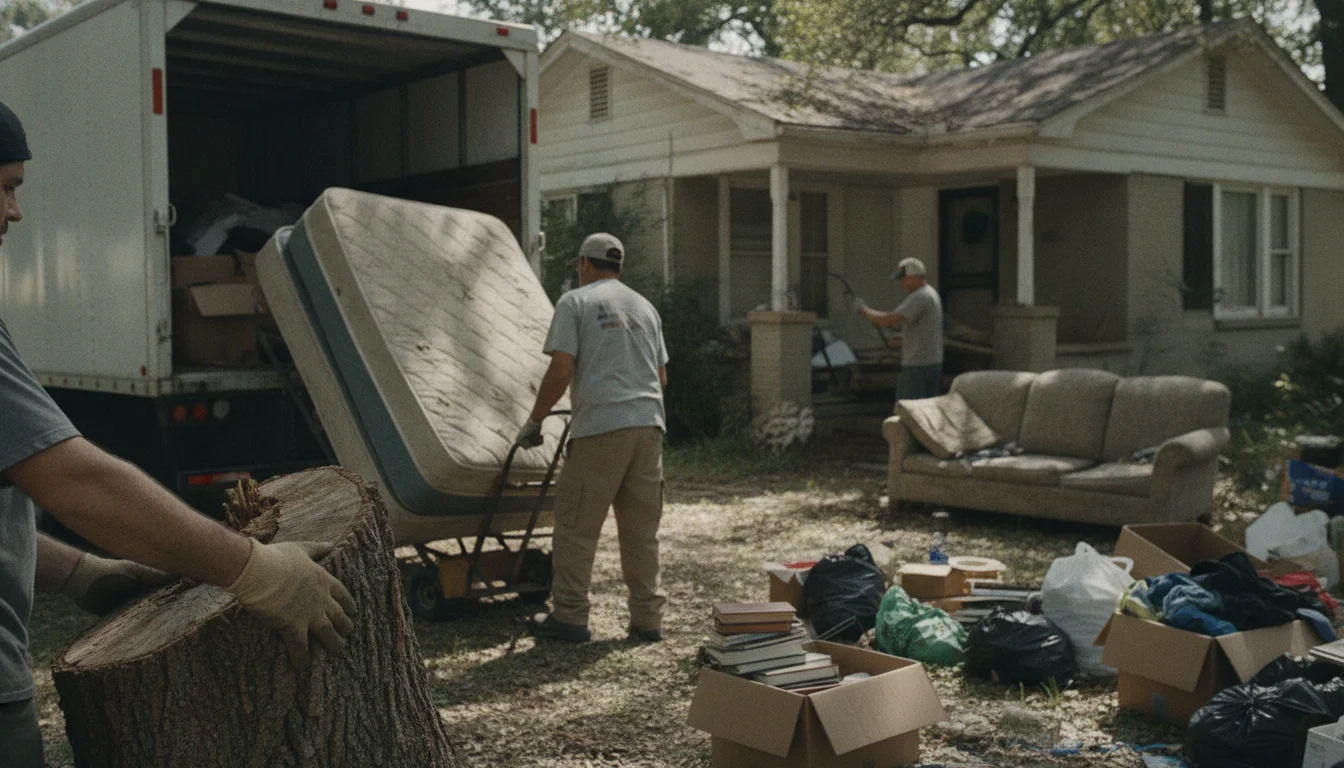
Loading is steady and planned. Crews bring dollies, hand trucks, and moving blankets. Table legs or doors may be removed to navigate narrow halls. Trucks are packed with attention to weight and fragility so items travel safely to their next stop. Donation‑ready goods go to local centers that accept them. Electronics and metals are separated when recycling applies. The U.S. Environmental Protection Agency offers guidance on electronics donation and recycling.
After removal, a broom‑clean finish means floors are swept, surfaces are dusted, and open areas are checked. It is not a deep clean, but it leaves rooms tidy and ready for photos. Many families then schedule a cleaning crew. If the property is headed to market soon, some teams can also stage a small set of items for appraisal or pickup. For larger households, Estate Cleanout can pair with House Cleanout to include overflow spaces and sheds within the Winchester area.
Handling Valuables, Documents, and Sensitive Items
Important belongings must be located, preserved, and logged. Teams ask about known valuables at the outset. This can include jewelry, coins, watches, art, or signed memorabilia. It also includes papers such as wills, deeds, titles, tax records, and family photos. Crews often create a dedicated “finds” table or bin. Items placed there are reviewed with the family or executor before any load leaves the site.
For documents, a clear method matters. Items to keep are boxed and labeled by type and year if known. Non‑essential papers containing personal data can be shredded. Cross‑cut shredding turns paper into small confetti and is safer than strip shredding for private data. The Federal Trade Commission provides guidance on preventing identity theft. Ask your team about shredding options or certified partners.
Chain‑of‑custody is the record of who handled an item, when, and where it went. In estate work, this helps protect valuables and private records. Simple logs, photo tags, and sign‑offs build that record. For high‑value pieces, teams may assign item numbers and photo sets, then require a signature upon handoff. Sealed bins with tamper tags add another layer for small items.
Some belongings need extra care. Firearms and ammunition require safe handling and storage that align with local rules. Medications should be removed and taken to a pharmacy take‑back site when possible. Old photos and films are fragile; cool, dry bins help protect them until family can scan. If relatives live out of town, shared photo folders and quick video calls allow approvals in real time. The goal is simple: locate what matters, keep it safe, and document each step.
Special Materials: Appliances, E-Waste, and Hazards
Large items can be challenging in tight hallways. Crews use shoulder straps, dollies, and sliders to guide heavy furniture. Pianos, safes, and gym equipment may require extra hands and specialized tools. Doors may come off hinges. Stair rails can be unbolted to open a path. Teams pad corners and lay runners to protect floors. When a turn is too tight, light disassembly may be used, with pieces wrapped for transport.
Appliances require planning. Refrigerators may contain coolants. Washers and dryers may have gas or water lines to address. Ovens and ranges can be heavy and brittle. Electronics like TVs, printers, and computers are considered e‑waste. Many of these items must be recycled at the appropriate site. The U.S. EPA outlines safe options for household hazardous waste, which families should review when sorting cleaners, paints, and chemicals.
Some materials are regulated. Old paint, solvents, pool chemicals, and pesticides cannot go in regular trash. Fluorescent bulbs and certain batteries contain toxins. Medical devices and sharps require special containers. Ask the team which items they can take and which must go to a designated drop‑off. When in doubt, crews can set a “hazmat corner” for items needing special handling so the main flow keeps moving while a plan is set for those materials.
Yard debris may be part of the job, too. Branches, limbs, and stump sections require saws and proper lifting. Many cities have green waste facilities. If you are unsure where to take tree stumps or limbs in Winchester, the team can guide you to local drop‑offs or include hauling in the plan. Mattresses, box springs, and sofas often have separate rules; teams can advise if they must go to a specific site or if recycling is available in Winchester.
Timelines, Access, and Coordination With Stakeholders
Estate projects often involve many parties. Executors, attorneys, real estate agents, and sometimes HOAs all need updates. A good cleanout plan identifies a single point of contact. That person approves the scope and any changes. The crew lead provides brief daily updates and photos as rooms are cleared so no one is left guessing what was done or where items went.
Scheduling should reflect key dates. If listing photos or showings are set, the team works backward from that date to allow for final touch‑ups. Access details matter. Are there gates, guard shacks, elevator keys, or loading docks? Are parking spaces reserved or metered? Is there a set time window when work is allowed? HOAs and multi‑unit buildings often have rules for moves and large items. Share those early so permits or elevator pads can be arranged.
Photo documentation supports progress tracking and real estate needs. Crews can take before‑and‑after shots of each room. They can log items set aside for appraisal or pickup. For distant family, a brief photo album each evening is often enough. If an agent will list the home, they may request empty‑room images or a small set of staged shots. These are easy to plan once the timeline is clear.
When access is tight, the plan may call for smaller trucks or multiple trips. Street parking rules can affect loading windows. In busy parts of Winchester, morning starts can ease traffic and reduce elevator waits. A written day‑by‑day plan reduces stress and helps if weather or building issues cause a change. Most teams can pivot to indoor tasks—sorting and packing—until loading can resume.
Pricing, Estimates, and What Affects Your Final Cost
Every estate is unique. Costs vary based on what is in the home, how difficult it is to reach, and where items must go. Four factors guide most estimates: volume, labor, access, and disposal. Volume is the space items take in a truck. Labor is how many hands and hours it takes to sort, pack, and remove. Access includes stairs, long walks, elevators, and parking. Disposal covers fees at transfer stations or special sites for particular items.
Some items change the plan. Heavy safes, pianos, or large sectionals may require extra time or tools. Appliances with coolants or gas lines may need special steps. E‑waste or hazardous items often go to specific sites, which can add handling. Donation loads can save disposal space but take time to sort and deliver. A good crew will explain these trade‑offs in plain terms.
Estimates can be on‑site or virtual. On‑site visits allow the team to walk each room, check access, and flag special items. Virtual estimates use photos or a live video call and work well when family members are out of town. In both cases, expect a written scope noting what is included and what would be considered an add‑on. Add‑ons might include shed tear‑downs, large swing‑set removal, backyard debris, or multiple attic trips. When a job is in flux, crews can set a mid‑project review to confirm the plan.
If you also need related help, ask about Estate Cleanout paired with House Cleanout or Attic & Basement Cleanout. These services can be scheduled back‑to‑back so the entire property is ready on schedule. For homes under lender timelines, Eviction & Foreclosure Cleanout can align with real estate deadlines in Winchester and nearby communities.
How Families Can Prepare: A Practical Game Plan
Preparation reduces stress and keeps choices simple. Start with a quick walk‑through. Tag the must‑keeps first. Then move from the easiest rooms to the hardest. Sentimental spaces can wait until later in the day once the team is warmed up and the flow is established. A simple label system helps everyone stay aligned.
Try this easy plan:
- Keep: items to move or store with family
- Sell: items for consignment or auction
- Donate: items in good shape for local centers
- Recycle: items like metals, e‑waste, or select plastics
- Dispose: items that cannot be reused
Set a single staging area for keeps. Use sturdy bins for photos and papers. Box by room and add short notes on each. For siblings in other states, share a photo album for quick yes/no votes. When choices are hard, set a five‑minute timer. Make the best call you can, then move on. Most families find steady progress is more satisfying than perfect sorting.
If you plan an estate sale, set dates with your sale partner before the cleanout. Mark sale items clearly. Ask the cleanout team to leave those items in place or stage them in a garage. After the sale, the team can return for final clearing. Save room for a few memory boxes—children’s art, letters, and a handful of favorite pieces can go there. These small steps help everyone feel heard.
Frequently Asked Questions
What happens to items that can be donated?
Most crews sort donation‑ready items during packing. They deliver to local centers that accept them and provide a simple receipt when available. Items that are not accepted may be redirected to recycling or disposal. Teams aim to keep useful goods in the community where possible.
How do I get rid of a mattress near me?
Rules vary by city. Some areas require drop‑off at a specific site or bagging to prevent pests. Many estate teams include mattress removal in the plan and know the right locations. Ask if recycling is available in Winchester for better landfill outcomes.
Can you remove a piano or safe from upstairs?
Yes, with the right tools and plan. Crews use straps, dollies, sliders, and extra hands. Doors or rails may be removed and reinstalled to create safe paths. If access is too tight, light disassembly may be used. Safety and property protection come first.
How are personal documents handled?
Teams set aside papers like wills, deeds, titles, and tax records for review. Items that must be kept are boxed and labeled. Non‑essential papers with private data can be shredded. Ask about certified shredding partners and a clear chain‑of‑custody for sensitive files.
Where can I take tree branches if I do yard cleanup?
Most cities have green waste or mulch sites. Estate teams can include branch and limb hauling in the plan or tell you the nearest drop‑off. If you also have stumps or large sections, a crew may cut them down for safer transport.
Key takeaways
- Estate cleanout covers sorting, removal, donation, recycling, and a broom‑clean finish.
- Sensitive items get extra care with logs, photos, and shredding when needed.
- Special materials like e‑waste and chemicals follow safe, regulated paths.
- Timelines and access shape the plan; steady updates keep everyone aligned.
- Simple prep with clear labels speeds the work and reduces stress.
Conclusion
Winchester Junk Removal understands this work is about people, not just stuff. The team plans each step, protects what matters, and leaves the home ready for its next chapter in Winchester and nearby areas. Contact us to schedule a thoughtful, step‑by‑step estate cleanout with a friendly crew that treats your family’s home with care.
If you are not sure which of these you are dealing with, it is worth having someone look at it before it turns into a bigger job. Get in touch with Winchester Junk Removal today and we will tell you where you stand.